
How Small Order Wholesale Cereal Lets You Test New Lines Without the Risk
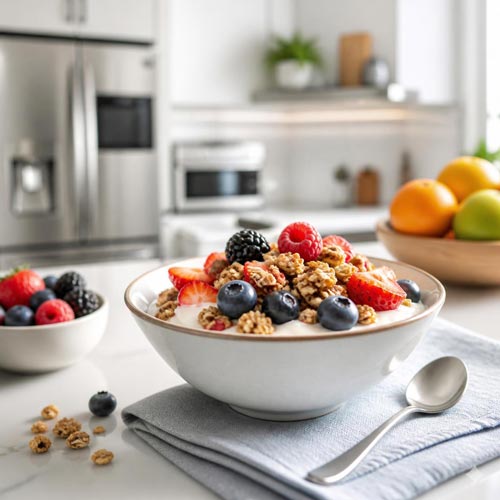
You can see that the breakfast cereal category is changing. Customers are asking for granola, for gluten-free options, for something beyond the usual supermarket boxes. But acting on that means committing to stock, and for a small store, committing to the wrong stock is expensive in ways that go beyond the invoice.
A pallet of product that doesn’t move doesn’t just tie up cash. It takes up space that could be earning. It sits there reminding you that you guessed wrong. This is why many independents are slow to experiment, and it’s why their cereal aisles end up looking like a scaled-down version of the big chains. Safe, familiar, and not particularly profitable.
Small order wholesale cereal changes this equation.
The practical question is how to move from a single test carton to a cereal range that reflects what your customers actually buy, without the financial risk of committing to stock that might not move. That starts with understanding how carton-level wholesale works, runs through setting up a trial that produces usable data, and ends with a repeatable ordering cycle that builds your range one decision at a time.
How does small order wholesale cereal work?
When manufacturers talk about small order wholesale, they’re usually talking about carton-level quantities rather than pallet-level. For a typical premium granola or muesli range, that might mean twelve 500g bags per carton, or six 1kg bags. A low minimum order, common among Australian manufacturers selling direct, gets you enough product to trial three or four SKUs at once without betting your working capital on any single one.
Buying direct from a manufacturer at carton quantities means you can trial a product the way you’d trial anything else in your store. Put it on the shelf, see how it performs over a few weeks, and reorder what sells. The risk sits where it should: proportional to the test, not to the supplier’s logistics model.
How do you trial new cereal lines in a small store?
Testing a new cereal line isn’t just about buying a carton and hoping. There’s a method to it, and it starts with thinking about what you’re trying to learn. The question is not “will this sell?” in the abstract. It’s “will this sell here, to my customers, at this price point, in this position on the shelf?”
A useful trial gives you clear answers. Stock two or three products from the range, not one, because a single SKU can fail for reasons that have nothing to do with demand. Put them where the customer looking for healthy cereal will see them, not buried at the end of the aisle behind the oats. Price them at the recommended retail, not discounted. You’re testing whether the product can sustain its margin, not whether you can give it away.
Give it three to four weeks. If a 500g bag is moving at even two or three units a week in a small store, that’s a signal. A 1kg format outselling the 500g tells you something about your customer base. They’re not trialling, they’re buying for the household. Nothing moving after four weeks is an answer too, and it cost you a few cartons to get it. That’s low-cost market research.
For a closer look at the financial case, read our article on why premium cereal delivers stronger margins for independent retailers.
What does a cereal trial actually tell you?
The trial tells you what moved. The reorder decision is about why it moved and what to do about it.
If one SKU carries all the volume while the others sit, the range is not the draw. That specific product is. Reorder it and replace the slower lines with something different rather than restocking the same set. If two or three SKUs sell at similar rates, the range itself is working, and your reorder should reflect the full mix.
A carton that sells through in two weeks rather than four is telling you something different from a carton that sells steadily over the full trial. Fast sell through means you need more shelf space for that product, not just another carton on the same timeline. Steady movement at two or three units a week means the product has found its pace and your reorder quantity is about maintaining supply, not expanding position.
How do you build a cereal range without overcommitting on stock?
The real power of small order wholesale isn’t in the single trial. It’s in the ability to build a range incrementally, one carton at a time, based on what your store’s data is telling you.
Your first order covers different needs. A classic granola, a gluten-free option, perhaps a keto or high-protein line. See which ones your customers respond to. Reorder the performers, drop the ones that don’t land, and test the next product in the range. Over two or three ordering cycles you’ve built a curated cereal section that reflects actual local demand, not a planogram designed for a different kind of store.
This is what gives independents an edge. Not replicating the major supermarkets’ range but reading your own customers and stocking accordingly. It turns the cereal aisle from a fixed cost into an iterative experiment, where every carton teaches you something and the cost of a wrong call is a single carton, not a pallet.
What should you look for in a wholesale cereal supplier?
If you’re building a range one carton at a time, the supplier matters as much as the product.
Australian-made matters to the customer. It’s a trust signal that supports the price point at retail. It’s a reason to buy that the customer already understands.
Award-winning products reduce the selling effort at shelf. They give the product a credential that does some of the work your staff would otherwise have to do, which matters when you’re introducing a line your customers haven’t seen before.
And reliable reorder matters more than it sounds. The whole point of the iterative approach is that you reorder what sells. If the product you’ve built demand for goes out of stock because your supplier can’t turn around a small order reliably, you lose the momentum the trial created.
If you want to trial premium cereal at carton quantities, you can explore the benefits and request wholesale pricing from the Plum Foods wholesale cereal page for independent retailers.
This article was reproduced on this site with permission from operafoods.com.au the “Cereal for Retailers Suppliers”.
See original article:- How Small Order Wholesale Cereal Lets You Test New Lines Without the Risk