
Understanding Paleo Granola and the Customer Behind It
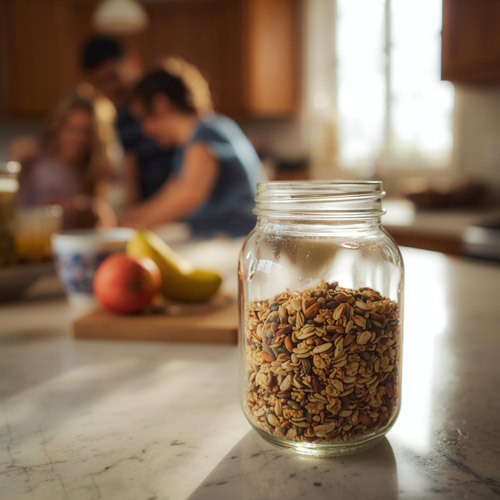
Paleo granola sits in a category of its own, even when it shares a shelf with other dietary cereals.
Unlike gluten-free granola, which is built around grain substitutes, or keto granola, which is engineered around a macro profile, paleo granola follows a food philosophy. The customer buying it may also have dietary or health considerations, but what drives their purchasing is a deliberate decision, often made after considerable research, that whole foods aligned with pre-agricultural eating patterns are how they want to eat. They apply that filter consistently; at every label they read.
For a retailer, that makes paleo granola a different stocking decision from the rest of the dietary cereal section. The customer arriving for it has already done the research, already made the commitment, and is looking for a product that meets their standard, not a compromise.
What follows is a detailed look at the product itself: what it is made of, how it eats, and what your staff need to know to sell it well.
What does paleo granola mean at the ingredient level?
Paleo granola is grain-free by design. That point is worth holding onto, because it separates this product from the broader gluten-free cereal category in a way that matters to the customer buying it.
In a conventional granola, the base is oats. In a paleo granola, oats do not appear at all. Not because they contain gluten (though they can), but because they are a cereal grain, and cereal grains sit outside the paleo framework entirely. The same applies to legumes and refined sugars. A paleo granola built to the philosophy rather than just the label will exclude all three.
What is the texture and eating experience of a seed-dominant, grain-free granola?
A granola built on a seed base does not eat like oat granola. There is no light, crisp cluster texture of the kind that oats produce when toasted and bound together. Instead, the eating experience is dense and substantial: crunchy from the seeds and almonds, with chew from the coconut and any fruit pieces, and a nutty depth that comes from the combination of pepitas, sunflower seeds, sesame, and flax rather than from a cereal base.
That is a genuinely different product, and it is worth being explicit about this with customers who may not have eaten a paleo grain-free cereal before. For a customer who has been eating this way for some time, the texture is familiar and expected. They are seeking it. For someone curious about paleo eating but not yet committed to it, the texture can feel unfamiliar on first encounter. That difference is relevant for how you position the product in-store and what your staff say when a customer picks it up and asks.
Plum Foods Paleo Probiotic Gluten-Free Granola
Plum Foods Paleo Probiotic Gluten-Free Granola does exactly that. The ingredient list runs: pepitas, sunflower seeds, sesame seeds, flax seeds, honey, coconut, almonds, organic coconut oil, sea salt, and Bacillus Coagulans (the probiotic strain). No grains or legumes. No refined sugar. The sweetness comes from honey only.
The inclusion of Bacillus Coagulans is where this product goes a step further than most paleo granolas on the market.
The probiotic’s presence in this product makes sense within the paleo framework. Gut health is a genuine preoccupation for paleo eaters, and it is part of the same whole-body, whole-food orientation that drives the dietary philosophy itself. The probiotic in this granola is not added to chase a trend; it extends and reinforces the product’s core argument about whole-food eating.
What is Bacillus Coagulans and how does it work in a shelf-stable granola?
Bacillus Coagulans is a spore-forming probiotic strain, which is why it appears in a dry, ambient product like this granola rather than in a refrigerated format. Most probiotic bacteria used in food and supplements are fragile; they require cold chain management to remain viable and are easily degraded by heat, moisture, and time. Bacillus Coagulans behaves differently. In its spore state, it is resistant to the heat involved in food production and to the ambient storage conditions of a standard retail environment. It activates in the digestive tract on consumption.
This is a legitimate and well-researched probiotic strain. It is not a marketing badge applied to a product that could not otherwise carry a probiotic claim. For a retailer, the relevant point is this: you can describe Bacillus Coagulans to a customer as a probiotic strain that survives ambient storage and activates on digestion, and that statement is accurate and defensible. What you should not do is make specific clinical claims about what it treats or cures, which falls outside what a food retailer can credibly or legally say.
Who is the paleo cereal customer, and what drives their purchasing decisions?
The paleo customer in a health food store or independent grocer is, typically, someone who has been eating this way for a while. They are not experimenting. They have read the literature, made a considered choice, and built a shopping routine around it. That means they read labels carefully, they know what the common substitutions and compromises look like, and they will notice immediately if a product marketed as paleo contains an ingredient it should not.
Their buying decision is about ingredient alignment. They are asking whether the product contains what it should and excludes what it should not. Price is a factor, but it is rarely the primary one. They are accustomed to paying more for products that meet their standards, and they have a low tolerance for products that use paleo as a marketing term without the ingredient list to support it.
This customer is also frequently interested in the provenance of their food. This product is made in Australia from majority Australian ingredients, and that carries real weight with them. It fits their preference for traceable, locally sourced whole foods.
What they are not is a difficult customer. They know what they want, they can articulate it, and when they find a product that meets their criteria, they tend to come back for it regularly. For a retailer, that translates to a loyal repeat buyer rather than an occasional browser.
How should retailers position and describe this product in-store?
On the shelf, this product sits clearly in the paleo and grain-free section if you have one, or alongside other dietary cereal options if your range is organised that way. The 1kg resealable foil-lined pouch is practical for retail display and signals a product with real shelf life and everyday volume.
The description your staff need is simple and accurate. This is a grain-free granola built on a seed, almond, and coconut base, sweetened with honey and free from added sugar, cereal grains, and legumes. It is made in Australia, carries a shelf-stable probiotic strain that supports gut health, and is suitable for paleo, gluten-free, and dairy-free diets.
Answering customer questions
The questions a well-read paleo customer is likely to ask fall into a few categories.
Is it grain-free? Yes. No oats, no cereal grains, no legumes.
What is the sweetener? Honey only, no refined sugar.
What probiotic strain is it, and is it live? It uses Bacillus Coagulans, a spore-forming strain that is shelf-stable and activates on digestion.
Where is it made? Australia, from majority Australian ingredients.
One useful framing for staff: if a customer describes themselves as paleo and asks for a breakfast cereal, this is the product that will satisfy the ingredient check without compromise. It is not an approximation of paleo eating. It is built to the philosophy from the ground up.
The bottom line
Paleo granola is a small but dependable category. The customer base is informed, consistent, and loyal to products that meet their standard. Stocking one well-chosen product, understanding what it is made of, and giving your staff the knowledge to talk about it confidently is all it takes to serve that customer well and earn their repeat business.
For more on building a dietary cereal range that serves health-conscious shoppers, see How to Build a Dietary Cereal Range For Retail.
Ready to build a dietary cereal range? Explore the full gluten-free granola range at Opera Foods and order wholesale direct.
This article was reproduced on this site with permission from operafoods.com.au the “Wholesale Retail Suppliers”.
See original article:- Understanding Paleo Granola and the Customer Behind It