
Is There Such a Thing as Gluten Free Granola?
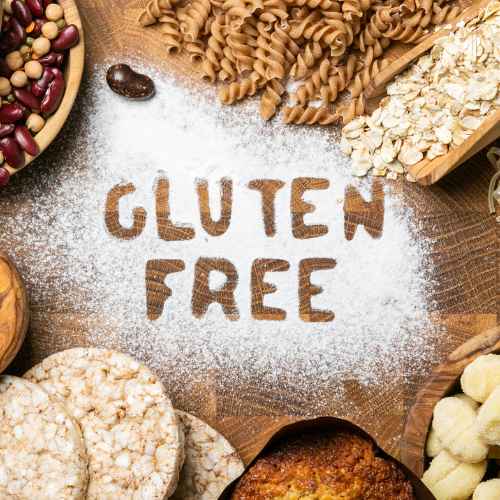
Gluten free granola is just one example of a free-from product where you just think ‘Well surely that’s obvious”. But when it comes to products with certain dietary requirements such as vegan or gluten-free, there is often more to it than meets the eye. In this article, we look at the things you need to consider when shopping for gluten free granola.
Gluten and Granola
The key ingredients in granola generally include grains (including but not limited to oats) some form of sweetener such as honey or brown sugar, and a variety of mix-ins such as nuts, seeds and dried fruits. Finally, many granola recipes include a bit of oil or another form of fat to help achieve that appealing crispy texture when baked.
Gluten grains in granola
Sometimes your granola may contain one of three gluten-containing grains, such as wheat, rye, or barley, with wheat being the most likely. Usually, it would be in the form of flour to help create those all-important crunchy clusters, or bran to help boost the fibre content.
Oats in granola
Oats are pretty much non-negotiable in a traditional granola recipe. And whilst oats are fairly benign in terms of gluten content, they may cause sensitivity issues in some people.
The first is the possibility of cross-contamination with gluten-containing grains. So unless your oats are certified as gluten free, then they may contain trace amounts of gluten.
The second is the contentious subject of gluten proteins in oats. Whilst oats do not contain the same gluten proteins as wheat, they do have their own glutens known as avenins. These have been shown to cause sensitivity in some people.
Find out more about this in our article ‘are oats gluten free?’
Labelling and gluten free certification
The final thing to consider is whether your granola carries gluten free certification. For some, it is a choice. For others, such as coeliacs or those with high levels of sensitivity, traces of gluten are a definite deal breaker. It’s important to read labels carefully or choose brands that explicitly state they are gluten-free to ensure you’re avoiding gluten in your granola.
You can find out more about food labelling in our introduction to gluten free food
Gluten Free Granola
Yet thankfully, none of this means that granola is off the menu. Gluten-free granola moves away from traditional ingredients that may contain gluten, focusing instead on elements that offer the same satisfying crunch without the gluten.
The base typically includes certified gluten-free oats, a crucial distinction as these oats are carefully processed to ensure there’s no cross-contamination with gluten-containing grains. The sweetener used remains the same – honey or brown sugar – and the mix-ins continue to be varied and customizable. Nuts, seeds, and dried fruits are naturally gluten-free and add both texture and flavour. Puffed quinoa or buckwheat groats may also be used for added crunch and nutrition.
Again, reading labels or choosing trusted gluten-free brands becomes essential when selecting these ingredients to ensure they have not been processed in facilities where cross-contamination could occur.
Granola without Oats
For those who prefer to avoid oats altogether, there is now a growing number of alternatives that are made without oats. In order to retain the classic characteristic of crunchy clusters no oat granola may contain a gluten-free grain flour such as rice flour, as well as popular alternatives such as quinoa or buckwheat.
You might like our award-winning Maple Nut Crunch Gluten Free Granola.
Or if your on a Keto Diet then consider one of our Keto Friendly Granola. Our Keto Granolas like Almond Cinamon are also Vegan and Gluten Free
Grain free granola
And then there is grain-free granola, made without the addition of grains of any kind. These types tend to focus heavily on pseudograins and seeds, as well as dried fruit, and have a looser less clumpy texture.
If you are interested in the concept of a grain-free diet, read our article about why going grain-free may be the answer to gluten free.
Is Paleo granola gluten free?
Yes, Paleo granola is gluten free, and also grain-free.
You might like our Crisp Apple Paleo Gluten Free Granola which is grain-free.
As we have seen, cereal is not necessarily off the menu for those on a gluten free diet. Why not explore our range of gluten free cereals today?
This article was reproduced on this site with permission from operafoods.com.au the “Gluten Free Granola Manufacturers”.
See original article:- Is There Such a Thing as Gluten Free Granola?
Is Muesli Good for You?
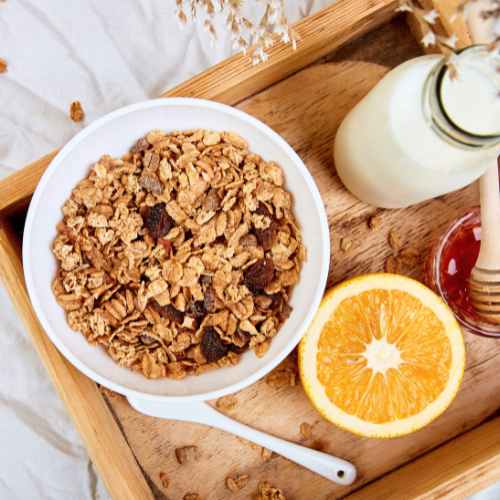
It is a breakfast staple for many, but is muesli good for you? In this article, we explore the role that muesli can play as part of a healthy breakfast and why it can (but not always) be a nutritious choice. We’ll also guide you on how to choose a healthy muesli and share some ideas for mixing it up a bit.
Let’s start with the basics.
What is Muesli?
This may sound like a silly question, but if sugary cereals have always been more your thing, then you could be forgiven for misunderstanding muesli.
Muesli is a (potentially) wholesome, uncooked breakfast dish that first originated in Switzerland. It’s typically made up of a base of rolled oats combined with various ingredients like dried fruits, seeds, and nuts. Some versions also include other grains, such as barley or rye flakes. Unlike granola, which is usually baked with sweeteners and oil, it is often eaten raw or soaked overnight in milk or yogurt.
There’s also toasted muesli which, as the name suggests, is muesli that has been toasted. Not quite granola, it does however have a crisper texture and more baked flavours than the regular stuff.
What’s muesli made of?
As we have seen, muesli is traditionally made from a base of rolled oats with other ingredients such as dried fruit and nuts added. But that’s not the whole story.
Is muesli full of sugar?
It can be. Many commercial brands can contain as much as 20% sugar. Luckily there are plenty of options that are low or no sugar. Watch out for natural forms of sugar too. Whilst sweeteners such as honey and maple syrup are preferable from a nutritional standpoint, they should still be lower down the list of ingredients. It is probably best to stay away from artificial sweeteners too, as the evidence against them continues to grow.
Wholegrain Cereal for a Healthy Breakfast Option
A healthy breakfast is crucial as it kick-starts your metabolism and provides the energy needed to see you through the day. It helps regulate your blood sugar levels, keeping you satiated and preventing overeating later in the day.
Additionally, a nutritious breakfast that includes a balance of protein, fibre, and good fats can improve cognitive function, helping you to concentrate throughout the day.
So, starting your day with healthy breakfast cereals such as muesli could be a great way to ensure you’re feeding your body right from the word go, and the first step towards a healthy diet. Read our article to find out more about why wholegrains are the heart of a healthy cereal.
The Benefits of Muesli
Is muesli healthier than oats?
It all depends. A traditional muesli made with oats will give you all the benefits of oats plus the additional nutrients of the fruit, nuts and seeds. But there are things to watch out for, as we will see later on.
The plus side
On the plus side, muesli is a great source of wholegrain fibre, vitamins and minerals.
Boosting your fibre intake comes with a host of health benefits. A fibre-rich diet aids digestion by adding bulk to the stool, helping prevent constipation and promoting regular bowel movements. Additionally, it can contribute to weight management by inducing a feeling of fullness, which can help curb overeating. Fibre can also play a crucial role in maintaining heart health by reducing levels of ‘bad’ LDL cholesterol, thereby reducing the risk of heart disease.
The unique soluble fibre in oats has been shown to have additional benefits such as improving insulin sensitivity, reducing inflammation and balancing gut microbiota.
It is also home to many essential vitamins and minerals, each contributing to various aspects of overall health. Packed with magnesium, iron, zinc, and B vitamins from whole grains, muesli aids in energy production and promotes a healthy nervous system.
The added nuts and seeds contribute healthy fats, as well as vitamin E, and selenium, which are known for their antioxidant properties and support for the immune system.
Dried fruits like raisins or apricots, are a good source of potassium and vitamin A.
However, it’s important to note that the nutritional profile can vary greatly depending on the specific ingredients used in each blend.
The downsides
Despite its numerous health benefits, muesli does have a few downsides that are worth considering.
First and foremost, some muesli blends can be high in sugar, particularly those that contain added sugars or a high proportion of dried fruits. Consuming excessive amounts of sugar can lead to weight gain, tooth decay, and increased risk of various health issues such as heart disease and type 2 diabetes.
Secondly, some store-bought muesli mixes may contain high amounts of sodium, which could contribute to high blood pressure if consumed in excess.
Lastly, muesli is calorie-dense, meaning it can be easy to overdo it, which could potentially lead to weight gain if not portion-controlled. As with any food, even those with numerous health benefits, moderation is key.
How to Choose a Healthy Muesli
When choosing a healthy muesli, there are a few key aspects to consider.
Firstly, opt for a brand that uses whole grains as the base, as these are packed with fibre and keep you feeling full for longer. However, if you choose not to eat grains there are some excellent grain-free muesli options available.
Our crispy apple paleo is a great little grain-free muesli
Secondly, pay close attention to the sugar content. As mentioned earlier, some brands can contain up to 20% sugar, so aim for options that are low or no sugar. Natural sweeteners are preferable, but they should not be a primary ingredient.
Also, look for a muesli that includes a variety of nuts and seeds for added protein and healthy fats. Dried fruit does contain sugar, albeit in a more nutritious package, but a variety of fruits will offer a range of vitamins and minerals.
Finally, be wary of unnecessary additives or preservatives – the fewer ingredients, the better. Stick to these guidelines, and you’ll be well on your way to choosing a nutritious, delicious bowl of muesli.
Our low sugar muesli varieties are made with no artificial preservatives, sweeteners or colours
What Can You Eat Muesli With?
Can I eat muesli without milk?
Whilst we wouldn’t recommend a bowl of dry muesli for breakfast (nosebag, anyone?) there are alternatives to the old-school cereal/combo routine.
Ideas for what to eat with muesli
- Yogurt Parfait: Layer your muesli with Greek yogurt and fresh fruits for a nutritious and visually appealing breakfast option. You can also add a drizzle of honey or a sprinkle of chia seeds for extra flavour and nutrients.
- Smoothie Bowl: Blend your favourite fruits with a bit of almond milk or coconut water and top it off with a hearty sprinkle of muesli. It’s a delicious, filling, and nutritious start to your day.
- Protein Shake: Top your protein shake with toasted muesli for a bit of extra crunch and a nutrient boost.
- Baked Goods: Use muesli in place of oats in your baking to add an extra dimension to your favourite baked goods. Think super easy muesli bars or flapjack. Or banana muffins maybe.
- With Plant-Based Milk: For a vegan option, try your muesli with almond milk, oat milk, or soy milk. You could also consider adding some fresh fruits or nuts on top.
- Quick Muesli Bars: Combine muesli with nut butter and honey, press into a pan, and let it set in the fridge. Cut them into bars for a quick and healthy snack on the go.
- Chocolate and Berries: For a decadent yet healthy dessert, mix your muesli with dark chocolate chunks and berries, then serve it with a dollop of whipped cream or Greek yogurt.
There are plenty of creative ways to enjoy muesli that go beyond the traditional milk and cereal combo. Whether you’re looking for a nutritious breakfast, a filling snack, or a healthy dessert, muesli offers versatility and countless options to suit your dietary needs and preferences.
Explore our range of healthy cereals to buy online. Don’t forget that you can buy in bulk and take advantage of wholesale discounts.
This article was reproduced on this site with permission from operafoods.com.au the “Healthy Cereal Manufacturers”.
See original article:- Is Muesli Good for You?
Yogurt with Granola – Start your Day with the Perfect Parfait
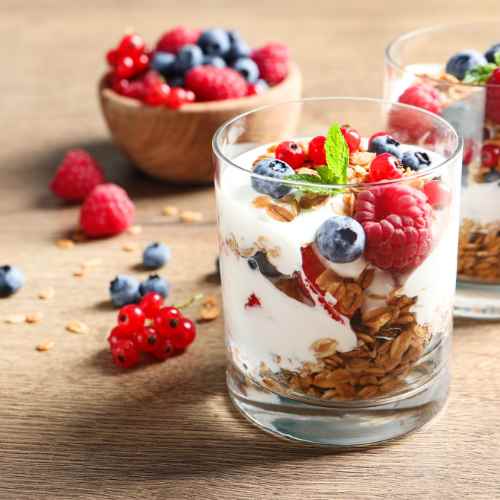
When it comes to a healthy breakfast, yogurt with granola is a perennial favourite. It’s a universally acknowledged truth that a healthy breakfast is not only the key to a balanced diet but also the best way to make an energetic start to your day. The winning combo of yogurt and granola isn’t just delicious; it’s packed with nutritional benefits that can kick-start your morning, and keep you feeling satisfied and energetic throughout the day.
Whether you’re an early riser or a reluctant morning person, let’s dive in to discover why a yogurt bowl with granola might just become your new favourite way to start the day.
It all Begins with a Healthy Breakfast
A healthy breakfast sets the tone for an energetic and productive day. While we sleep, our bodies are still working, using up stores of energy that need to be replenished when we wake. A nutritionally balanced breakfast provides us with the essential nutrients and energy to perform effectively throughout the day.
What’s more, a healthy breakfast can help regulate metabolism and prevent snacking on high-calorie foods later in the day. Skipping this crucial meal can lead to increased hunger and potentially overeating, which can be counterproductive if you’re aiming for a balanced and healthy lifestyle.
So, why is yogurt with granola healthy?
Yogurt with granola is super nutritious, providing a harmonious blend of proteins, healthy fats, fibres, and essential vitamins and minerals that complement each other perfectly. Throw in some fruit and the list of benefits just gets longer.
The health benefits of yogurt
Yogurt is renowned for its numerous health benefits, making it an excellent choice for breakfast.
- High in Protein: Yogurt is packed with protein, which is essential for building and repairing body tissues. Not only that, but it keeps you feeling fuller for longer.
- Rich in Calcium: A great source of calcium, yogurt is ideal for helping to maintain strong, healthy bones and teeth.
- Good for Gut Health: Yogurt contains probiotics, beneficial bacteria that can enhance gut health and aid digestion.
- Boosts Immunity: The probiotics in yogurt can also strengthen your immune system, helping your body resist infections.
- Vitamins and Minerals: Yogurt is rich in a wide variety of vitamins and minerals, particularly B vitamins, calcium, and phosphorus.
The health benefits of granola
Granola, a crunchy and delicious addition to your breakfast, also boasts numerous health benefits:
- Packed with Fibre: Granola is an excellent source of dietary fibre, which aids in digestion and helps maintain a healthy digestive system.
- Healthy Fats: Many granolas include nuts and seeds which contain healthy fats, essential for heart health and maintaining cholesterol levels.
- Energy Booster: Granola is a concentrated source of energy, ideal for kick-starting your day or fueling physical activity.
And then there’s fruit. All around general good guy.
Fruit offers some incredible health benefits. Rich in vitamins, minerals, and dietary fibre, fruit can aid digestion, strengthen the immune system, and even promote skin health. Most fruits are packed with antioxidants, which fight against harmful free radicals, reducing the risk of chronic diseases like heart disease, cancer, and diabetes. Additionally, the natural sugars in fruit provide a quick, healthy energy boost, making it a perfect addition to your morning yogurt bowl.
Is granola with dried fruit good for you?
Absolutely. Granola with dried fruit can be a healthy choice, but it’s important to consider the quality and quantity of ingredients. Dried fruits can enhance the nutritional profile of granola by adding fibre, vitamins, and antioxidants. However, they can also increase sugar content, so it’s recommended to choose options with no added sugars or artificial sweeteners. Find out more about the sugar content of granola in our article on low-sugar granola.
The Perfect Pairing – Yogurt with Granola
As we have seen, from a nutritional standpoint yogurt and granola make the perfect pair. Especially when a portion or two is thrown into the mix. But just why do granola and yogurt work so well together?
Yogurt and granola create a symphony of taste and texture that is simply irresistible. The creaminess of yogurt provides a perfect contrast to the crunch of granola, delivering a satisfying mouthfeel with every bite. The tangy flavour of yogurt enhances the sweetness of the granola, which can be further enriched by the inclusion of dried fruits or a drizzle of honey. Also, the cool freshness of yogurt is balanced by the comforting oven-baked homeliness that is granola.
Creating the perfect breakfast yogurt bowl
The beauty of this pairing lies not only in its deliciousness but also in its versatility. You can make endless combinations of yogurt, granola, and fruit yet there is one thing that won’t change. Your yogurt bowl will only be as good as the quality of your ingredients.
Choose healthy yogurt
- Opt for Plain Yogurt: Flavoured yogurts often contain high quantities of added sugars. Opt for plain, unsweetened yogurt.
- Check the Fat Content: Yogurts come in non-fat, low-fat, and full-fat versions. Depending on your dietary requirements and preferences, choose one with a suitable fat content. However, remember that full-fat yogurt tend to be more satiating.
- Look for Live Cultures: Yogurts with live and active cultures are a fantastic source of probiotics, which can enhance gut health. Look for labels that indicate the presence of these beneficial bacteria.
- Choose Organic: If possible, go for organic yogurt. This is made from the milk of cows that haven’t been given antibiotics or artificial growth hormones.
- Consider Greek Yogurt: Greek yogurt is strained more times than traditional yogurt, making it thicker and creamier. It is also packed with protein, making it a great option for a filling breakfast.
- Avoid Artificial Additives: Some yogurts contain artificial flavours, colours, or sweeteners. Check the ingredient list thoroughly to ensure your choice is as natural and healthy as possible.
Choose healthy granola
- Read the Ingredients List: Always check the ingredients list. The healthiest granolas are usually those with the fewest and most recognisable ingredients.
- Look for Whole Grains: Make sure whole grains are at the top of the ingredient list. Find out more in our article about whole grains for a healthy breakfast.
- Check the Sugar Content: Some granola can be high in added sugars. Look for granola with less than 6g of sugar per serving. Be aware of different names for sugar like honey, brown rice syrup, or cane sugar.
- Avoid Artificial Additives: As with yogurt, granola should be as natural as possible. Avoid brands that include artificial flavours, preservatives, or colours.
- Look for Healthy Fats: Granola containing nuts, seeds, or oils like olive or coconut can provide healthy fats which are essential for your body and brain.
- Consider Protein Content: To make your granola more filling, look for options that contain nuts, seeds, or a source of protein like whey or casein.
- Watch Serving Sizes: Granola can be dense in calories, so pay attention to serving sizes. A serving is usually 1/4 to 1/3 of a cup.
Putting Together the Perfect Breakfast Parfait
Wait, what? Isn’t parfait a kind of ice cream? Sadly, no. Actually, it is but when it comes to breakfast, parfait is just a fancy name for yogurt with granola. Yogurt parfait tends to be layered in a glass, rather than piled in a bowl, in order to maximise the surprise factor of contrasting ingredients on the spoon. It is also, of course, utterly Instagrammable.
Whether you choose to layer your ingredients in a glass, or simply put them in a bowl, the concept remains the same. Take some good yogurt, some great granola, and add some fruit; fresh or otherwise. Depending on the content of your granola, you may wish to add any number of extra toppings such as nuts and seeds.
Healthy yogurt bowl ideas
Australian Berries: Layer Greek yogurt, a handful of your favourite local berries (raspberries, blueberries, strawberries), granola, and a drizzle of honey. Top with a sprinkle of chia seeds for an extra nutritional boost.
We think this would be great with our classic almond crunch granola.
Apple Cinnamon Autumn Crisp: Combine natural yogurt with stewed cinnamon apples, granola, and a sprinkle of cinnamon on top. For added crunch, toss in some sliced almonds.
Try something a little different with our crispy apple paleo granola.
Nuts About Bananas: Layer banana slices with Greek yogurt and granola. Top it off with a sprinkle of walnuts and a drizzle of almond butter.
Make it extra nutty with our award-winning maple nut crunch granola.
Choc Cherry Forest: Blend Greek yogurt with a spoonful of unsweetened cocoa powder, and add in some tart cherries and granola. Top with a sprinkle of cacao nibs.
This cranberry crunch granola would be a great substitute for sour cherries.
Pretty as a Peach: Layer peach slices, Greek yogurt, and granola. Finish with a drizzle of honey and a sprinkle of flax seeds.
This honey and macadamia crunch would be the perfect granola here.
And there you have it. We reckon yogurt and granola not only make for a delicious start to your day but also a nutritious one, providing the energy you need to power through. Remember, the beauty of a yogurt bowl breakfast is in its versatility. You can mix and match flavours, layer in your favourite fruits, or even throw in some nuts and seeds for added crunch. And don’t forget, choosing the healthiest types of yogurt and granola makes a big difference, so always read the labels. Armed with these tasty ideas, why not have a go at getting creative with your granola bowl?
Take a look at our range of healthy cereals, including some great crunchy granola to get you started.
This article was reproduced on this site with permission from operafoods.com.au the “Granola Manufacturers”.
See original article:- Yogurt with Granola – Start your Day with the Perfect Parfait
Top Tips for Crafting the Perfect Overnight Oats
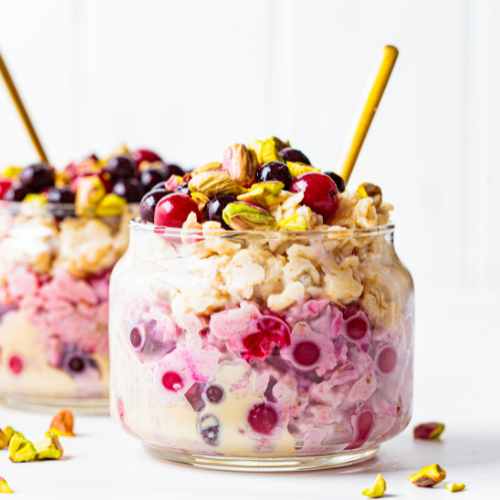
If you are looking for a nutritious, easy-to-prepare, yet still delicious breakfast option, then overnight oats could be just what you need. Packed with goodness, highly customizable, and incredibly convenient, overnight oats are the perfect solution for those busy mornings when you need a quick yet healthy start. Read on to uncover the secrets behind crafting your perfect bowl of morning oats.
Why Overnight Oats?
Overnight oats are a fantastic choice for several reasons.
Number one, they are super good for you. Rich in fibre and protein, they keep you satiated for a longer period, aiding in weight management and promoting digestive health. They’re also packed with essential vitamins and minerals that contribute to overall well-being.
Number two, they are gonna save you a ton of time. You simply mix the ingredients the night before, and by morning, you have a ready-to-eat, healthy breakfast waiting for you. This makes them an ideal option for those rushed, early mornings.
Number three, you can totally make it your own. Overnight oats are incredibly versatile; you can customize them to suit your taste preferences, dietary needs, or even the season. Whether you like them sweet, fruity, or nutty, there’s an overnight oats recipe out there for you.
Oh, and did we mention delicious?
What’s not to love.
The Basic Recipe
The basic recipe for overnight oats requires just a few key ingredients. At its core lies rolled oats, which are the foundation of this dish.
These organic rolled jumbo oats are ideal for making classic overnight oats.
Next is a liquid, usually milk or a dairy-free alternative like almond or soy milk, to soften the oats and create a creamy texture. A sweetener such as honey or maple syrup can be added for a dash of sweetness. Finally, a bit of yoghurt can be included for a tangy flavour and extra creaminess. These ingredients form the base of your overnight oats, to which you can add a variety of toppings and mix-ins for flavour and a nutritional boost.
So, in a nutshell, here’s what you do. Remember, this process starts the night before. The clue is in the name.
- Choose your container: First, select a container to make your overnight oats in. This could be a jar, a bowl, or a Tupperware container with a lid.
- Mix the base ingredients: Add 1/2 cup of rolled oats, 1/2 cup of your preferred liquid (milk or dairy-free alternative), and a scant pinch of salt into your container. Add your chosen sweetener as desired. If you like, mix in 1/4 cup of yoghurt as well. Give everything a good stir to combine.
- Add your mix-ins: This is where the fun begins. Feel free to add your favourite fruits, nuts, seeds, or spices. But don’t forget that the texture will change. Nuts, for instance, will lose some of their crunch. Grated apple will add liquid back into the oats. So think about not just the flavour, but the final textures that you want to achieve.
- Let it rest: Once all the ingredients are combined, cover your container, and place it in the fridge overnight. The oats will absorb the liquid, soften, and develop a beautiful, creamy texture all on their own.
- Enjoy: The next morning, give your oats a good stir and add a little extra liquid if needed. Top with more of your favourite fruity, nutty, seedy bits, and enjoy your healthy, filling breakfast.
The basic overnight oats recipe
For 1 serving
1/2 cup rolled oats
1/2 cup milk
a pinch of salt
Sweetener, as required (sugar, honey etc)
Fruit, nuts or seeds
- Combine, cover and place in the fridge overnight. That’s it!
All you need to remember is that the overnight oats ratio is equal parts of oats to milk. And that half a cup is an ample serving for one person. After that, it’s up to you how you make your overnight oats.
Getting Creative
Now’s the fun part. There is just no end to the possibilities of your bowl of overnight oats.
Here are a few healthy breakfast ideas to get you started.
Fruity overnight oats
Apple Cinnamon: Grated fresh apple, a dash of cinnamon, and a sprinkle of brown sugar. Top with chopped walnuts. Don’t be afraid to mix up your base either. Give our 5 grain porridge blend a go, instead of regular oats.
Tropical Delight: Mix in dried coconut shavings and chunks of pineapple. Finish with a topping of toasted coconut flakes and a splash of coconut milk.
Banana Nut Crunch: Add mashed banana and almond butter into your oats mix. Top with sliced bananas and crushed almonds.
Berries Galore: A medley of fresh or frozen berries like strawberries, blueberries, and raspberries. Add a dollop of Greek yoghurt on top.
Feeling something different?
Spiced Pumpkin: Mix in pumpkin puree and a sprinkle of pumpkin pie spice. Top with pecans and a drizzle of maple syrup.
Chocolate Lovers: Blend in cocoa powder and a dollop of nut butter. Top with dark chocolate chips, and for an added crunch, some granola.
Peanut Butter Jelly: Mix in a spoonful of peanut butter and a swirl of your favourite jam. Top it off with a sprinkle of crushed peanuts.
Or, you could go with a seasonal theme that not only suits your seasonal ingredients but your style of eating and mood too.
Seasonal overnight oats
Autumn Harvest: Try adding roasted pumpkin cubes, a dash of cinnamon, and a drizzle of honey to your oats. Top it off with crunchy pumpkin seeds.
Winter Warmer: Mix in stewed apples with a touch of vanilla and clove. Sprinkle over some toasted pecans for added warmth.
Spring Fling: Incorporate fresh strawberries and a dollop of light, creamy yoghurt. Finish with some chopped mint leaves for a refreshing touch.
Summer Zest: A combination of fresh blueberries, a swirl of lemon zest, and a sprinkle of chia seeds make a vibrant and tasty mix. Top it off with a spoonful of honey for a touch of sweetness.
Mix things up even further by experimenting with different grains and ready-made muesli mixes for your base.
Try this classic organic original bircher mix or our hinterland bircher muesli which is already packed with nuts and fruit.
Remember, these are just ideas to get you started. Feel free to experiment with what you have, what’s in season, and what you love!
Our Top Tips for the Perfect Overnight Oats
The right oats to use
Opt for old-fashioned rolled oats when making overnight oats, as they soak up the liquid well and offer a creamy, chewy texture, unlike instant oats which can become too mushy.
The ideal ratio of oats to liquid
The ideal ratio for overnight oats is typically 1:2, meaning that for every one part of oats, you should use two parts of liquid; this ensures your oats are well-soaked and achieve a creamy consistency without being overly soggy.
To sweeten or not to sweeten?
When it comes to sweetening your overnight oats, it’s entirely a matter of personal preference; you can choose to add natural sweeteners like honey or maple syrup or rely on the natural sweetness of your chosen fruits and toppings. Remember though that oats, and many milks especially dairy, have their own inherent sweetness too.
What is the ideal refrigeration time for overnight oats?
For the perfect texture and flavour, allow your overnight oats to refrigerate for at least 8 hours, but not more than 24 hours. This allows the oats to fully absorb the liquid and soften, creating a creamy and delicious breakfast treat. If left longer than 24 hours, the oats might become overly mushy. Always keep them covered to prevent your fridge flavours from mingling.
We think that overnight oats are a great choice for breakfast that is not just super convenient and time-saving, but versatile and nutritious too. The different combinations of oats, liquids, sweeteners, and toppings, mean you can make it your own without getting stuck in a rut. Whether you like your oats slightly chewy or creamier, sweet or fruity, there is tons of room for creativity. So why wait? Try making your own batch of overnight oats tonight! Who knows, you might discover your new favourite breakfast dish.
Our top tip? Making the perfect overnight oats is all about finding the right balance that works for you!
Have you discovered our full range of healthy cereals yet? Don’t forget, that if you still aren’t sure about what goes into a healthy breakfast, then check out this in-depth guide.
This article was reproduced on this site with permission from operafoods.com.au the “Healthy Breakfast Cereal Manufacturers”.
See original article:- Top Tips for Crafting the Perfect Overnight Oats
5 Really Good Reasons to Make the Switch to Spelt Today

What is spelt, exactly? Have you ever wondered why you should bother with it? Isn’t it, after all, just another variety of wheat? The very thing that you are told to avoid.
Yet this often overlooked ancient grain offers numerous benefits to your health. Not just packed with nutrients it also has a unique, nutty flavour that sets it apart from the more neutral-tasting wheat. You’ll be pleased to know that spelt is a sustainable choice too! Stick around as we take a look at five of the most compelling reasons why you should make the switch.
Reason 1: Spelt is Rich in Nutrients
Despite its similarities to wheat, spelt has a lower gluten content and higher levels of protein, fibre, vitamins, and minerals. Its gluten proteins are said to be easier to digest than the gluten in wheat.
Spelt contains an impressive array of minerals. Amongst them are iron and magnesium, both of which are essential to maintaining optimal health. Iron is critical for healthy blood, while magnesium helps regulate nerve and muscle function. But it doesn’t stop there – it also contains phosphorus, potassium, and zinc, all of which have important roles to play.
A rich source of vitamins, spelt is a great source of B vitamins and is higher in niacin (B3) than wheat. B vitamins are essential for maintaining energy levels, optimal brain function, and healthy cell metabolism. Niacin in particular is used by the body to turn food into energy and provides support for the digestive system. Spelt is also a rich source of vitamin K which helps the body to absorb calcium.
Reason 2: Easier to Digest than Wheat
When you consume wheat, the gluten proteins can be difficult for your body to break down, leading to discomfort and inflammation. Spelt, on the other hand, has a slightly different gluten structure that makes it gentler on the digestive system.
It could be worth giving spelt a try to see if you notice a difference in how you feel after eating it.
Reason 3: A Sustainable Option
Spelt is a low-input crop, requiring minimal resources such as water and fertilizers, making it more sustainable and environmentally friendly than conventional crops. A hardy crop, spelt can withstand various weather conditions and is more resistant to pests and diseases, reducing the need for chemical treatments.
Farmers are increasingly turning to spelt as a low-input, high-quality alternative to other grains, making it a promising option for a more sustainable agriculture industry.
Another exciting advantage is its ability to thrive in challenging soil conditions. Unlike other crops, spelt is highly resistant to drought and can produce a greater yield in poor soil. This makes it an ideal crop for small organic farmers who want to grow food sustainably without relying on chemical fertilizers or large quantities of water.
Reason 4: Spelt is a Tasty Alternative
This ancient grain has a mild taste that can be described as sweet and nutty, with a slightly earthy undertone. Slightly sweeter than wheat it offers more depth of flavour to your dishes. Whilst it is soft like wheat, and not dense like some other grains, it can be a little heavier.
Reason 5: A Versatile Grain
Wheat is everywhere. Granted, it is now in a lot of places that it really does not need to be, but the fact that we find it so difficult to live without stands testament to its versatility. Yet there is very little that you can do with wheat that you cannot do with spelt. It does, in fact, behave in exactly the same way. There are also a few uses for spelt that you may not consider for wheat.
An ideal grain for a healthy breakfast
Spelt makes an ideal alternative to wheat in healthy breakfast cereals, adding another dimension of texture and flavour as well as a nutritional boost.
This award winning granola contains wholemeal spelt
Our organic 5 grain porridge contains spelt
Healthy baking and cooking
Although not suitable for gluten free baking, many people are turning to spelt flour as a stand in for standard wheat flour. Completely interchangeable with wheat flour, it can be used everywhere from thickening sauces, to cakes and bakes. Keep it in the cupboard instead of all purpose flour. White spelt flour is ideal for this, but you can swap out a small proportion with the wholemeal variety to add nutritional and textural variety.
Take a look at our organic spelt flour, available in wholemeal and white.
Use whole grains in cooking
Most of us do not use wheat in any other form than flour. Whole spelt grains can be used in the same way as any other whole grain, such as rice or barley. Like barley, spelt is available in its ‘pearled’ form, meaning that the outer husk has been processed to make it easier to cook. In this form it can be added to soups, salads and stews. You can even use it to make a super healthy risotto.
Explore our award winning range of healthy whole grain breakfast cereals.
This article was reproduced on this site with permission from operafoods.com.au the “Breakfast Cereal Manufacturers”.
See original article:- 5 Really Good Reasons to Make the Switch to Spelt Today
Choose Low Sugar Granola
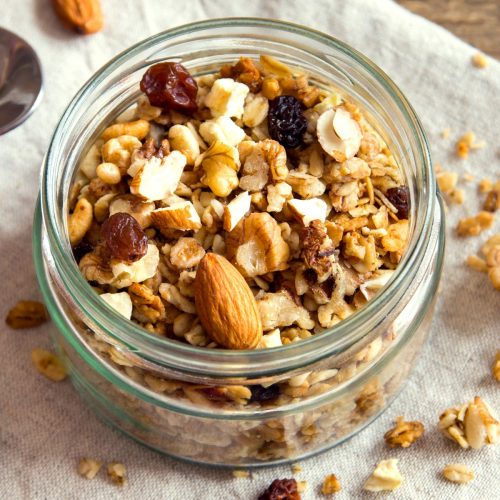
With low sugar granola you don’t have to give up your favourite breakfast cereal. When you are reducing your carb intake, or keeping an eye on the sugar you consume, the advice for breakfast is usually along the lines of ditching your breakfast cereal for something more protein focused. Which tends towards the savoury.
But what happens if you happen to like your breakfast routine? What if the crunch of cold milk and cereal is what propels you out of bed in the mornings? Nutritional benefits of cereal and milk aside, the thing that can be lacking from many a low carb diet is crunch. Or is it crisp. Maybe it is the two combined, but whatever it is it is different from the bite of apple or a stick of raw carrot.
The more foods that you eliminate from your diet, the harder it can be to find food that satisfies on all levels. Granola is often the first to go, with its combination of grains, fat and sugar. No wonder we like it so much. But there is just something about granola, and as a foodstuff it is entirely unique. More than muesli, not quite flapjack, and defo not porridge; when you want granola nothing else will do.
What is low sugar granola?
There are gluten free options for granola, and even completely grain free granola, but today we are focusing on sugar.
Overconsumption of sugar is a big issue, and most of underestimate the amount we eat or even the ill effects it can have in the long term. Sugar in breakfast cereals is a massive problem, with many cereals containing over 40% sugar. That’s a big number, when you really stop and think about it.
For cereal to be considered low sugar, ideally it should contain less than 10% sugar and above 3% fibre (the fibre content helps to offset the glycaemic load). Remember we mentioned the fat in granola? That’s the stuff that makes it clump together and sets it apart from muesli. That also helps to lower the glycaemic load.
The final thing you are looking for in a low sugar granola or cereal is that it contains no refined sugars.
The difference between refined and unrefined sugars
The first thing that you need to understand is that sugar is sugar. Keeping your intake to a minimum is always the goal. But when it comes down to it, natural unrefined sugars are always going to trump the refined white stuff. Not to mention all the weird commercial ingredients that are ultra refined, such as corn syrup.
But unrefined sugars are closer to natural whole foods, and as such contain more of the nutritional good stuff in the plant.
Forms of natural sugar
Coconut sugar
Coconut sugar is ideal when you need a crystallised sugar replacement. Sugar is used in so many products partly because it brings specific qualities that syrups do not. Coconut sugar does not taste of coconut, but has a light caramel sweetness like pale brown sugar. A natural source of vitamins and minerals, coconut sugar has a lower GI (35) than most sugars and syrups.
Honey
The original natural sweetener, honey is very very sweet and has a high GI of 50. A little, however, does go a very long way. Raw honey is of huge nutritional value. It has antioxidant and anti inflammatory properties, as well as a rich and varied vitamin and mineral profile. Honey also offers huge depth of flavour, that other sweeteners can lack.
Coconut nectar
Coconut nectar is the liquid version of coconut sugar. It is less sweet than honey.
Maple syrup
Rich in minerals, with a distinctive flavour, maple syrup has a high GI of 54. Again though, a little goes a very long way.
Agave syrup
Agave syrup is often used as a vegan alternative to honey. It has a fairly neutral taste, and a low GI of 17. Despite this, it is very sweet and, as with most of these natural liquid sugars, goes a long way. It is easier to use and control than honey as it is far runnier.
Dried fruit
Dried fruit may be a source of concentrated sugar, but is also full of fibre, as well as vitamins and minerals. Still intact, as a whole fruit, dried fruit is one the best natural sources of sweetness. When sweetening with dried fruit, you don’t need to add as much of the other sources of natural sugar.
Spices
Often overlooked, there are several spices that can be used to bring sweetness to foods. Not inherently sweet, the sweet spices such as cinnamon and cardamom do help to enhance sweet flavours. Cinnamon is also know to help lower blood pressure. Vanilla is also excellent at increasing the sensation of sweetness in a dish.
What’s in my low sugar granola?
Our famous roasted almond crunch does contain very small quantities of sugar to allow for it’s superior texture yet still comes in at under 10% sugar. The bulk of the sweetness comes from natural agave syrup and cinnamon.
Our equally popular maple nut crunch granola is naturally sweetened with agave and maple syrups, with a touch of cinnamon. With 8.9% sugar it is our lowest sugar granola, and contains 0% refined sugar.
Our spelt and agave nut crunch is also sweetened with agave and maple syrups, with a touch of cinnamon and cardamom. It also contains less than 10% sugar, and no refined sugar at all.
Explore our range of low sugar cereals, available to buy online now with bulk buy discounts.
This article was reproduced on this site with permission from operafoods.com.au the “Healthy Cereal Suppliers”.
See original article:- Choose Low Sugar Granola
Why Oats are Still the Backbone of a Healthy Cereal
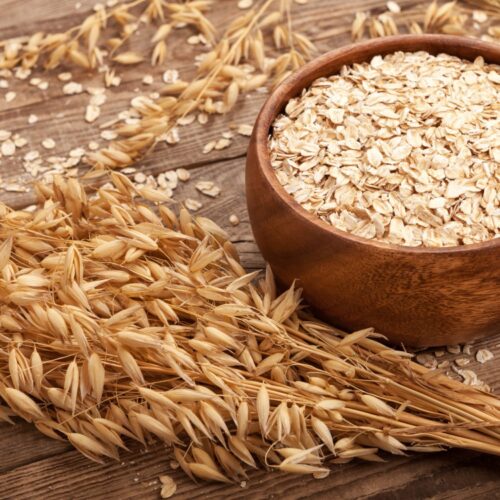
What with keto, and the controversial avenin/gluten content debate, oats have begun to get as much bad press as wheat. Yet the truth is that its very low in gluten and unless you have clearly identified that avenin causes you problems, then you should strongly consider including oats as a regular part of your diet.
The Heart of a Healthy Cereal
At Opera Foods we take our breakfast pretty seriously. We spent a long time considering ‘what makes a healthy breakfast‘ and reached the conclusion that wholegrain cereal is the healthiest breakfast of them all.
So what does that mean? Certainly not all wholegrain cereals are equal. Staying away from the big commercial brands, especially those marketed towards children, is probably a good start. When choosing a healthy cereal, muesli, granola, and porridge, are at the top of most people’s lists.
Speciality blends (such as keto or Paleo ) aside, most of these breakfast cereals have one thing in common. And that is oats. If wholegrains are truly the heart of a healthy cereal, then oats are most definitely the backbone.
Oats in Granola
The entire point of granola is those crunchy, possibly even chewy, clusters. It is one of the things that sets granola apart from muesli. Btw, which side are you on? This may help; muesli vs granola.
We have lots of lovely oat based granola blends for you to try. As well as a few that aren’t.
Oats in Muesli
When Mr Bircher first created his restorative recipe, he didn’t reach for the buckwheat or the quinoa. He choose to base his easily digestible breakfast around the restorative power of oats.
Have you tried our premium muesli blends?
Oats in Porridge
Likewise, generations of Scots have started their day on a warming bowl of porridge oats, which are a staple ingredient in Scotland. Granted, this is largely because they grow really well there and traditional foods do tend to evolve through availability. Yet oats behave in a certain way when cooked in liquid that makes porridge so appealing. They have a certain creaminess, even when cooked in water, that is inherently easy to eat. A bowl of porridge at breakfast will certainly see you through to lunch, and possibly all the way though to dinner. It is just that good.
Our five grain porridge blend is based on organic jumbo oats.
The Health Benefits of Oats
Oats have a ton of beneficial properties and can be considered a true superfood. Which is why we recommend that you only eliminate them from your diet if the downsides outweigh the good.
In short, oats can…
- help lower cholesterol
- help control insulin secretion
- help lower anxiety
- prevent blood sugar spikes
- soothe your gut
- supercharge your skin
Which is quite a lot for an unassuming and often misunderstood little grain. So how do oats manage to provide all these benefits. What supercharges this super grain?
Beta – glucan; heart healthy fibre
Beta-glucan is a soluble fibre found in many grains, yet is particularly abundant in oats.
Soluble fibre dissolves in water to form a gel, unlike insoluble fibre that passes straight through. Although both are types of fibre, they actually have the opposite effect on the body. Together they provide powerful protection for your gut.
The mucus-like gel coats and lubricates the gut lining, slowing down digestion and keeping you fuller for longer. This, in turn slows down the absorption of sugar and helps to stabilise blood sugar levels as well as improve overall blood sugar regulation.
Beta-glucan has been shown to to drastically lower LDL (unhealthy) cholesterol levels, leading to a marked improvement in total cholesterol.
Essential mineral magnesium
Things rarely work in isolation, especially when it comes to health and nutrition. Oats are known to be one of the best foods for helping to control blood sugar levels. Not only does the beta glucan help with blood sugar regulation, but oats are also a rich source of magnesium that helps to regulate insulin secretion. A diabetic double whammy, if you like.
Gramine; nature’s sedative
Oats are a traditional remedy for insomnia, depression and anxiety. We now know that they contain the alkaloid gramine, that acts as a natural sedative.
Water loving polysaccharides
Oats are also well known for their skin softening properties, and again feature highly in traditional beauty remedies. Their excellent moisturising properties are down to the sugars that they contain, which attract and hold water to lubricate the skin.
Silica; skin care’s best kept secret
The mineral silica is involved in the making of collagen and elastin, which provides the structure for firm youthful looking skin. It is also found in hyaluronic acid (yes, that one) which helps to keep the skin matrix supple.
Tocotrienol; skin soothing vitamin E
Oats are very soothing for the skin. They contain a compound known as tocotrienol, which is actually a member of the vitamin E family. As well as its skin soothing properties, it is thought to offer some protection against UV damage too.
Zinc; for problem skin and hair
As if all of this were not enough, oats also contain zinc, which is helpful in controlling sebum production. Greasy hair and breakout skin are often caused by out of control sebum production, and zinc can certainly help with this.
So that’s the lowdown on why oats are such a valuable part of a healthy diet, unless of course you do have issues with avenin sensitivity. Oats are very low in Gluten. In the USA they allow it to be called Gluten Free. Including them in your diet may reap more rewards than excluding them so we believe it is well worth serious consideration.
As always, feel free to explore our range of premium healthy cereals, available to buy online in bulk today.
This article was reproduced on this site with permission from operafoods.com.au the “Australian Breakfast Cereal Manufacturers”.
See original article:- Why Oats are Still the Backbone of a Healthy Cereal
The 5 Big Benefits of Buckwheat

Buckwheat is a small heart shaped pseudo-grain that has many benefits for our health. Not a true cereal, it actually belongs to the same family as rhubarb. But what exactly are the benefits of buckwheat?
1. Buckwheat is gluten free
There is a lot of confusion these days around some true grains that although considered gluten free, do actually contain some gluten proteins that can trigger a reaction. As a pseudo-grain, one of the best benefits of buckwheat is that it is completely gluten free. Because of this, it finds its way into many gluten free cereals such as our delicious gluten free maple nut crunch.
Buckwheat groats are also an excellent addition to your arsenal of gluten free grains.
2. Buckwheat supports hormonal balance
Buckwheat is rich in a group of plant hormones known as lignans, that have been shown to promote hormone balance in both men and women. Studies also suggest that these may also help to protect against breast cancer.
3. Buckwheat is great for your skin
It is particular good for sensitive skin. With antioxidant rutin for strengthening capillary walls, and anti inflammatory quercetin, this little seed is really good at calming the flare ups associated with sensitive skin and conditions such as rosacea or eczema.
4. Buckwheat is good for your gut
Buckwheat is a rich source of fibre; both soluble and insoluble. Not only does this help to balance blood sugar levels and lower LDL cholesterol, but helps with healthy digestion too. Soluble fibre lubricates and soothes the gut, whilst the insoluble fibre acts as a prebiotic, keeping the balance of the gut microbiota in check.
5. Buckwheat is a good source of energy
Slow release carbohydrates help maintain blood sugar levels, providing a sustainable course of steady energy. Magnesium and manganese help the body to metabolise this carbohydrate efficiently. In fact buckwheat contains over half the recommended daily allowance of magnesium, making it a truly rich source of this valuable mineral.
As if all these weren’t enough, the antioxidant content of this nutrient rich seed give it some flawless heart healthy credentials too.
We believe that whole grains are the heart of a healthy cereal but did you know that sprouted grains come with extra benefits? Sprouting turns the stored energy inside grains and seeds into raw plant energy, making them more easily digestible and increasing the bioavailability of the nutrients.
How to sprout buckwheat
For sprouting you need the raw seeds. You can tell the difference by looking at the colour; toasted buckwheat is golden brown whilst raw buckwheat is green.
Soak the raw groats for 30 mins, then drain and keep moist until they sprout. You can use a damp j cloth, or layers of kitchen roll, as long as you make sure to prevent them drying out. Once they sprout, eat them soon as they can deteriorate quite quickly.
We stock a range of premium healthy breakfast cereals, including those that are vegan, gluten-free, and even paleo.
If you would like to learn more about what makes a healthy breakfast, be sure to read our in-depth article.
This article was reproduced on this site with permission from operafoods.com.au the “Healthy Australian Cereals Manufacturer”.
See original article:- The 5 Big Benefits of Buckwheat
Rice Bran – Spotlight on Whole Grain Cereals
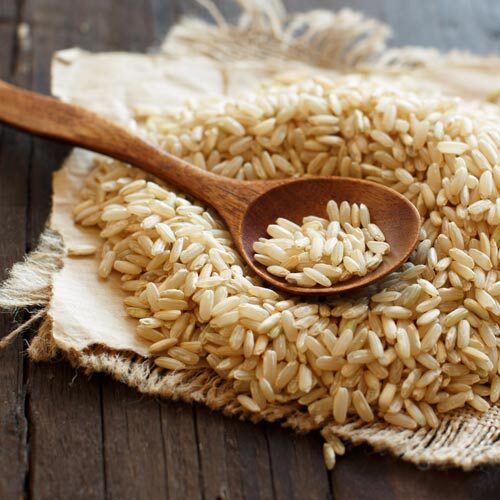
Rice bran, indeed rice in general, has been finding its way into all kind of breakfast cereals as the focus moves away from wheat. Following on from our article on the benefits of eating whole grains for breakfast, we have been exploring some of these whole grains in more detail. This time it is the turn of rice.
Rice in your breakfast cereal
How breakfast cereal has changed. Variations of crisped rice, made with super crisp refined white rice and a ton of added sugar, have been a childhood (and late night snack time) favourite forever. Yet, generally speaking, rice does not appear in the ingredients lists of your average granola, muesli or porridge.
As one of the few true gluten-free grains, rice is having a bit of a moment. Versatile beyond its side dish status, and with all the benefits that whole grains have to offer, it is no surprise that brown rice for breakfast has become a thing.
Where might you find rice in your healthy cereal? Rice comes in a variety of forms suited to breakfast cereals, so look out for puffed rice, rice flakes, or rice bran.
Puffed rice, especially puffed brown rice, is not as crisp and shell like as commercial rice crispy type cereals. It has a texture and taste closer to that of popcorn. Rice naturally has a different texture to corn so it is steamed to add moisture before being air popped in the usual manner. Puffed rice can be found in many gourmet granola mixes, particularly in gluten-free granola, but is also great on its own.
Our gluten free maple nut crunch granola contains puffed rice.
Rice flakes are thinner than oats, with a texture unlike most flaked grains. Usually steamed and then flattened most rice flakes are not meant to be eaten raw, requiring cooking or soaking to soften them. This makes them ideal for porridge style blends.
Our fig and apricot bircher muesli contains brown rice flakes.
Is rice gluten free?
Yes, rice is gluten-free.
What does brown rice taste like?
Brown rice has more flavour than refined white rice and a slightly chewier texture. It tastes slightly sweet and nutty.
Does rice have protein?
Both brown and white rice have similar levels of protein. Rice does contain some protein, but it is not considered a high protein grain such as quinoa. Quinoa is also a complete protein, whilst rice protein lacks certain amino acids.
Is rice healthy?
Most of the nutrients in rice are contained within the bran and the germ. These parts are removed in the production of white rice, yet remain intact in brown rice.
Brown rice has twice as much fibre than white rice, and is abundant in antioxidant plant compounds known as flavonoids. Rice bran is particularly rich in lignans. These are another beneficial plant compound that it is suggested can help to lower the risk of many diseases, particularly female concerns such as osteoporosis, menopause and breast cancer.
The vitamin and mineral content of brown rice is higher than that of white rice, and it is particular rich in manganese, as well as a good source of magnesium, selenium, and B vitamins.
Which rice is the healthiest?
As we have seen, brown rice has far more nutrients than white rice, making it a healthier choice than white rice.
Yet, even white rice, although not as nutritious as brown rice, has its virtues. Not just gluten-free, it also has the benefit of being really easy on the digestion. Particularly good for those who may not even tolerate oats, white rice flakes make the ideal porridge and are a gentle way to start your day.
Next time you are buying breakfast cereal, look out on the label to see if it includes brown rice. And don’t forget that we have a range of healthy cereals at our online wholesale grocery store.
Find out more about what makes a healthy breakfast in our in-depth article.
This article was reproduced on this site with permission from operafoods.com.au the “Healthy Cereal manufacturers and distributors”.
See original article:- Rice Bran – Spotlight on Whole Grain Cereals
Quinoa Flakes: Spotlight on Whole Grain Cereals
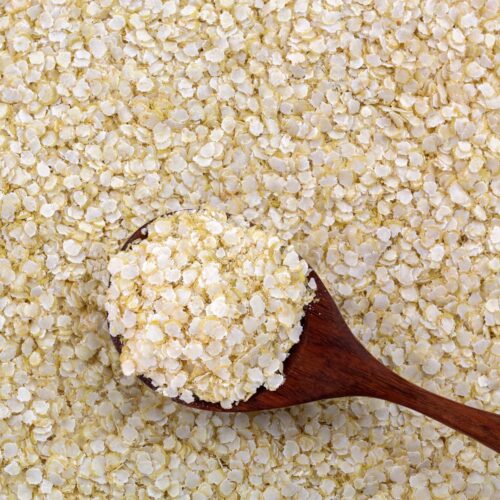
What are quinoa flakes? Healthy cereal, especially muesli and granola, goes way beyond wheat. We have already looked at how wholegrains are the heart of a healthy cereal, and would now like to investigate some of these healthy grains in more detail. Starting with quinoa flakes.
Quinoa in your breakfast cereal
With more and more people on the lookout for healthy breakfast cereals that will meet their dietary needs, or even just a bit more interest in their morning bowl, quinoa has found itself in the ingredients list of many a premium muesli or granola.
Most of us are, by now, familiar with quinoa as an ingredient. Something we may cook instead of rice, or stir into a healthy grain salad. It looks like a round seed, bigger than chia, that softens and expands when cooked. But breakfast cereal requires a different approach. Raw, whole grains are completely unpalatable. Yet cooked grains are no longer dry; a state which is kind of crucial to the whole concept. The answer lies, and always has, in some kind of mechanical processing.
So, you will find quinoa in your breakfast cereal in two forms. Puffed quinoa, and quinoa flakes. Puffed quinoa is less raw than quinoa flakes as it is popped using heat (like puffed rice). Quinoa flakes, on the other hand, are pressed raw (like rolled oats). Both forms are just alternative versions of whole quinoa, so have the same nutritional benefits and properties.
Quinoa flakes are found in our 5 Grain Porridge mix, as well as our gluten-free granola Maple Nut Crunch.
Is quinoa a grain?
Unlike true grains, quinoa is the seed of a plant rather than a cereal grass. We think of it as a grain, as it behaves in very much the same way, but it is a pseudograin, not a true grain.
Are quinoa flakes gluten free?
Yes, quinoa flakes are gluten free.
Is quinoa a carb or a protein?
Quinoa is both carb and protein. As a grain-like food we tend to cook and serve it like a carbohydrate, and it does indeed contain carbohydrates. But it also provides us with all the essential amino acids and is considered a complete protein. For that reason, it has bonafide superfood status.
What does quinoa taste like?
Quinoa tastes slightly sweet and nutty. It does have a little bitterness, with grassy undertones. The taste and texture of quinoa flakes is not unlike rolled oats; when toasted they are more nutty and sweet.
Are quinoa flakes healthy?
Quinoa flakes share all the nutritional benefits of quinoa, which is higher in nutrients than most grains.
Good for your heart –
Omega-3 fatty acids help to reduce the LDL cholesterol that leaves fatty deposits on the walls of the arteries, increasing the risk of heart attack. They also help to reduce inflammation.
Good for growth and repair –
One of the best sources of plant protein, quinoa helps to keep hunger at bay and therefore maintain a healthy weight. It is particularly rich in amino acid lysine, which is important for tissue growth and repair and is believed to be particularly effective at burning fat.
Full of antioxidants –
A great source of antioxidant vitamin E (hello healthy skin), quinoa is also rich in the polyphenol quercetin; another powerful antioxidant.
Rich in minerals –
Quinoa is an abundant source of minerals. There’s…
Manganese for metabolism.
Phosphorus for bones.
Iron for blood.
Copper for the heart.
Quinoa flakes are also really easy to digest, which makes them perfect for breakfast.
Explore our range of healthy cereals, all of them packed full of wholegrains and other natural ingredients.
Or find out more about what makes a healthy breakfast.
This article was reproduced on this site with permission from operafoods.com.au the “gourmet cereals manufacturer”.
See original article:- Quinoa Flakes: Spotlight on Whole Grain Cereals