
Tag: breakfast cereal for retailers
Why Premium Cereal for Independent Retailers Delivers Stronger Margins than Mainstream Brands
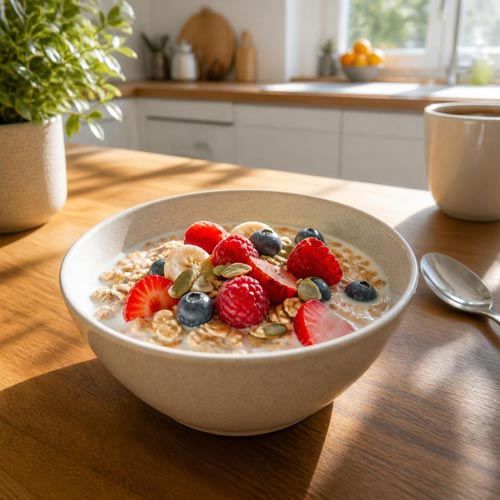
You probably stock breakfast cereal the same way you always have. A few mainstream brands take up most of the shelf, chosen because they’re familiar and they move. The margins are thin, but the volume is reliable, and nobody gets fired for stocking frosted flakes.
The problem is that this logic was built for a version of the cereal aisle that no longer exists. Category data across Australian retail shows granola and muesli growing steadily while traditional breakfast cereals flatten or decline. The shopper standing in front of your shelf in 2026 is not the same shopper who stood there ten years ago.
A growing share of them are actively looking for something the mainstream brands don’t offer, whether that’s clean-label granola, low-sugar muesli, or gluten-free options that actually taste like something. When they can’t find it in your store, they’re not switching to cornflakes. They’re going somewhere else. That’s where premium cereal starts to make financial sense for your store, and it has nothing to do with chasing a trend.
This article walks through why the margins work, from shelf-space arithmetic and price positioning through to on-shelf performance and what to look for in a supplier.
What margins does premium granola earn per shelf metre?
The first thing to understand is that premium cereal operates on a different margin structure to mainstream. A 500g bag of clean-label granola from an Australian manufacturer might wholesale at two to three times the unit cost of a mass-market box. But it retails at a price point where the per-unit margin, in dollars rather than percentage, is stronger.
But what matters even more for your store is the return per metre of shelf space. A mainstream cereal might turn faster, but if four facings of premium granola generate the same gross profit as eight facings of a national brand, the granola is earning its space more efficiently. You have limited shelf real estate, as every independent does, and that’s the number that counts.
How does premium cereal protect you from price competition?
If you’re competing on price against the major supermarkets, you’re playing a game with a known outcome. The big chains will always have more buying power, more promotional support, and more willingness to use cereal as a loss leader to drive foot traffic. Stocking the same mainstream brands at competitive prices is a race to the bottom you cannot sustain.
Premium cereal sidesteps this entirely. A customer buying a bag of Australian-made granola is not comparing your price to the supermarket down the road. They’re buying something the big chains either don’t stock or bury in a health-food aisle that feels like an afterthought. The purchase decision is driven by product quality and availability, not by price comparison. That’s the only terrain where you have a structural advantage.
This is a margin argument as much as a competitive one. When a product isn’t being shopped on price, you’re not under pressure to discount it. The margin you set is the margin you keep.
How does premium granola perform once it’s on the shelf?
One of the advantages of premium cereal is how it behaves once it’s on the shelf. Clean-label products with short ingredient lists and genuinely good taste tend to build habitual buyers faster than mainstream alternatives. The customer who tries a bag of premium granola and likes it doesn’t go back to scanning the cereal aisle. They come in looking for that specific product.
What this means for margin is less obvious but more important than the per-unit number. A habitual buyer costs you almost nothing to retain. You’re not running a promotion to move the product, which means the margin you built into the retail price stays intact rather than being eroded by a two-for-one or an end-of-aisle discount. You’re not absorbing dead stock because it sat too long.
Product that moves on a predictable cycle doesn’t get marked down or written off on your shelves, and in a perishable-adjacent category like cereal that matters more than you might think. And you’re reordering on a rhythm you can plan around, which means tighter inventory management, fewer emergency top-ups, and less cash sitting on the shelf between deliveries. Every one of those factors feeds margin. Not on the price tag, but on the cost side of the equation that you might not be factoring into your shelf decisions.
What should you look for in a wholesale cereal supplier?
Not all premium product is created equal, and if you’re choosing a supplier for the first time you should be evaluating the relationship through a margin lens, not just a product one.
Australian-made matters to the shopper. It’s a trust signal and a differentiator against imported health-food brands that trade on packaging more than provenance. But it also matters to your margin, because Australian provenance supports the price point at retail. It’s a reason to buy that the customer already understands.
The practical details matter just as much. Buying direct from the manufacturer, without a distributor margin layered in, protects your per-unit number at the point where it’s most vulnerable. And award-winning products reduce the selling effort at shelf. They give the product a credential that does some of the work your staff would otherwise have to do, which is a labour cost most stores don’t think of as a margin factor.
The question isn’t whether premium cereal belongs in your store. It’s how much shelf space you’re currently giving to low-margin mainstream product that could be earning more for every centimetre it occupies.
If you’re ready to see what premium cereal could do for your margins, request wholesale pricing and samples from the Plum Foods wholesale cereal page for independent retailers.
This article was reproduced on this site with permission from operafoods.com.au the “Cereal for Retailers Suppliers”.
See original article:- Why Premium Cereal for Independent Retailers Delivers Stronger Margins than Mainstream Brands
What Independent Retailers Need to Know About Health Star Ratings on Breakfast Cereal
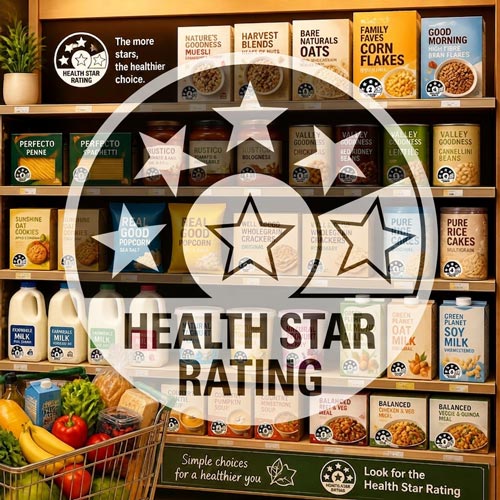
Australia’s Health Star Rating system is going mandatory. After more than a decade as a voluntary scheme, food ministers voted in February 2026 to require HSR labelling on nearly all packaged food, triggered by an industry uptake rate that stalled well short of the 70% target. The timeline for legislation is still being finalised, but the direction is set. Every breakfast cereal on your shelf, regardless of brand or price point, will carry a front-of-pack star rating scored by the same algorithm.
Right now, some products display a star rating and some don’t. Customers who care about nutrition have to read the back of pack or already know what they’re looking for. Once HSR is mandatory, every box gets a number, and that number becomes the thing customers reach for when comparing one breakfast cereal against another. It looks like a simple measure of how healthy something is. It isn’t quite that.
This article breaks down how the algorithm behind the rating actually works and where it creates distortions in the breakfast cereal category. It looks at what the rating can and can’t measure about quality, and what independent retailers need to understand before every breakfast cereal on the shelf carries a star.
How does the Health Star Rating algorithm work
The HSR doesn’t score a product on any single nutrient. It runs two tallies. One adds penalty points for the things health guidelines say we should eat less of: sugar, saturated fat, sodium, and total energy. The other adds reward points for protein, fibre, and FVNL content (fruit, vegetable, nut and legume). The star rating comes from subtracting the rewards from the penalties. The higher the rating, the healthier the product is supposed to be.
That trade-off is the part worth understanding. The positive factors don’t just sit alongside the negative ones on a panel. They directly cancel them out in the final number. A breakfast cereal with high sugar but also high protein can arrive at the same star rating as one with low sugar and low protein, because the protein rewards have offset the sugar penalties. The customer sees two identical ratings. The nutritional profiles behind them can be very different.
This is what the star rating doesn’t communicate on its own. It’s a net score, not a nutrition panel. It compresses multiple factors into a single number, and the number doesn’t show how it got there.
How can a high-sugar cereal score the same as a low-sugar one
Breakfast cereals are a category where this effect is particularly visible. Research published in 2025 found that protein-enriched cereals achieved comparable star ratings to non-enriched ones despite carrying higher sugar and sodium levels. The added protein compensated for the penalties those nutrients attracted. The algorithm doesn’t ask where the protein came from. Protein isolate added to a processed cereal earns the same reward points as protein that occurs naturally in nuts, seeds, and whole oats.
The same indifference applies on the penalty side. The honey or maple syrup that binds a granola cluster together scores identically to refined sugar in a coated flake. The algorithm counts them the same.
Why whole-ingredient cereals score modestly
This puts granola in a particular bind. A granola made from whole ingredients carries sugar it genuinely needs to exist in its product form. Its protein and fibre come from the actual food. Those nutrients are there because the ingredients are real, not because they’ve been selected to move a score. But the algorithm gives no credit for the quality or origin of what’s in the product. It just runs the numbers. So a whole-ingredient granola can score modestly, penalised for sugar that’s doing a structural job and only partially rescued by protein and fibre that happen to be there naturally. A more processed cereal that has been specifically formulated to optimise its rating can land at the same level or higher.
Are consumers choosing breakfast cereal on macronutrient profiles alone
There may be a broader shift underneath this, and mandatory HSR could accelerate it. The question is whether consumers are increasingly making food choices based on macronutrient profiles alone. High protein is a buying signal. Low sugar is a buying signal. These are reasonable instincts. They come from real public health messaging. But they also encourage a way of thinking about food that treats it as a delivery vehicle for numbers. Protein is protein. Sugar is sugar. Fibre is fibre. Which ingredient delivered the nutrient, how it was grown, how it was processed. None of that registers in a macro-first framework.
The HSR system has, in effect, codified that view. It evaluates all food, breakfast cereal included, by macronutrient arithmetic alone. Products engineered to hit the right numbers are systematically favoured over products that arrive at their nutritional profile because they’re made from real, whole ingredients. The algorithm can’t tell the difference, and a consumer trained to read macros first may not look for it.
What does the Health Star Rating miss about quality
The algorithm is also blind to things that sit outside its formula but inside the way many customers actually choose their breakfast cereal.
It doesn’t distinguish between Australian-grown oats and imported commodity grain. It doesn’t register whether ingredients were sourced from a single supply chain or assembled from the cheapest available components on the global market. A cereal made in Australia from Australian ingredients and one manufactured offshore from undifferentiated bulk inputs can carry identical ratings, because the algorithm isn’t measuring provenance. It’s measuring macros.
For independent retailers and specialty grocers, that gap matters. Provenance and local sourcing are part of how independents differentiate from the major chains. Your customers often choose your store precisely because you stock products with a story behind them. They care about where the ingredients come from and how they were produced. The HSR doesn’t penalise any of that, but it doesn’t reward it either. It simply can’t see it.
How can independent retailers help customers understand Health Star Ratings on breakfast cereal
Your customers will treat those star ratings as meaningful, because that’s what front-of-pack labelling is designed to do. Some will use the number as a filter and move on. Others will want to know why a granola made from recognisable whole ingredients scores the same as, or lower than, a processed cereal that’s been formulated to hit its numbers. Those questions are going to come up more often once the stars are on every box. Knowing how the algorithm works lets you have that conversation rather than be caught out by it.
What story does the Plum Foods ingredients list tell
At Plum Foods, we make granola with less refined sugar and more whole ingredients, produced in Australia using predominantly Australian ingredients. That’s our position on what breakfast cereal should be. Real ingredients doing real jobs, with nothing added to optimise a score.
Standardised front-of-pack labelling gives customers a consistent reference point, and that has genuine value. But we also know that our products exist in a category where the algorithm’s blind spots are most pronounced. Ingredients are whole foods, not fortification. Provenance is part of the proposition. The star on the box will tell your customer one thing about our granola. The ingredients list tells a fuller story.
If you’re building a cereal range that can stand up to that conversation, explore the Plum Foods wholesale range for retailers
This article was reproduced on this site with permission from operafoods.com.au the “Breakfast Cereal for Independent Grocers Suppliers”.
See original article:- What Independent Retailers Need to Know About Health Star Ratings on Breakfast Cereal