
Tag: retail granola supplier
What Separates a Premium Gluten-Free Granola from the Supermarket Shelf
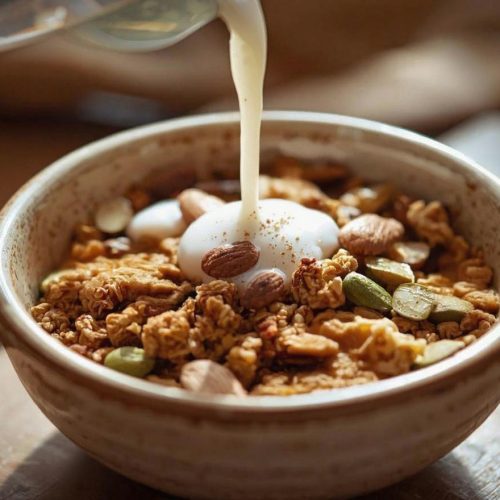
The gluten-free customer who shops at an independent grocery or health food store is not the same customer who picks up a mainstream gluten-free cereal at the supermarket out of habit. They are reading labels, comparing ingredient lists, and looking specifically for a premium gluten-free granola that the major retailers do not stock. If your gluten-free cereal section carries the same products they already know, it is not giving them a reason to stop.
This article covers what separates a premium gluten-free granola from a mass-market alternative, looking at ingredients, production, Australian provenance, and what independent food awards signal to the customer standing at your shelf.
What ingredients separate a premium gluten-free granola from a mass-market one?
A premium gluten-free granola starts with whole, recognisable ingredients: real grains and seeds that are naturally gluten free, held together with genuine sweeteners rather than refined syrups or glucose. A mass-market gluten-free cereal, by contrast, is typically formulated around rice flour, corn starch, and sugar. These are ingredients chosen to mimic the texture and cost structure of conventional cereal rather than to deliver anything nutritionally interesting.
That difference is visible on the back of pack, and your gluten-free customers will notice it.
Whole grains versus processed starches
Mainstream gluten-free cereals lean heavily on rice flour and corn starch because they are cheap, neutral in flavour, and easy to work with at scale. The result is a product with a uniform texture and an ingredient list that signals little beyond the absence of gluten.
By contrast, a granola built on whole puffed quinoa, buckwheat, puffed rice, and sorghum is doing something different. Quinoa and buckwheat are not grains in the botanical sense but seeds, and they behave like whole grains in the bowl. They hold texture, carry flavour, and contribute protein and dietary fibre that rice flour cannot replicate. Sorghum adds a mild nuttiness and additional fibre. The ingredient list tells a story that a label-reader can follow.
Sweeteners that do something
Real maple syrup is not interchangeable with refined sugar or glucose syrup, and a customer who bakes or cooks will know that. It has a lower glycaemic index than refined sugar and a distinct flavour that carries through into the finished product. That association with quality is immediately legible on a label. Mass-market gluten-free cereals that use glucose syrup or a sugar-and-oil slurry as their binding agent are optimising for shelf life and unit cost, not for flavour or nutrition.
Nuts and inclusions versus flavouring
The difference between “almond flavour” and actual almonds is obvious to anyone reading an ingredient list. A granola that contains whole almonds, contributing fat, protein, and texture, is a substantively different product from one that uses a handful of inclusions to hit a marketing claim. The customer who reads labels understands this distinction instinctively.
Does a gluten-free granola also suit vegan customers?
The Plum Foods Maple Nut Crunch Gluten-Free Vegan Granola is both gluten free and suitable for vegan diets, which means it serves two overlapping customer needs from a single SKU. For a retailer building a tight, well-curated dietary section, a product that covers both categories without compromise is genuinely useful. It earns its place on the shelf twice over without requiring additional facings.
Why does Australian provenance matter to the gluten-free customer?
For the label-reading gluten-free customer, where a product is made is part of the quality signal, not incidental to it. Australian-made means local ingredient sourcing where possible, domestic manufacturing standards, and a shorter supply chain. For a customer already paying close attention to what goes into their food, those details matter.
The Great Taste Award signal
Plum Foods Maple Nut Crunch granola is a Great Taste Award winner. That distinction carries weight for a specific reason: it is a blind-judged food award, not a marketing badge. A customer who recognises the Great Taste Award knows it reflects independent assessment of flavour and quality, not a brand’s own claims. On a shelf where most products compete on price and pack size, a Great Taste Award is a credible differentiator.
Find out more about Maple Nut Crunch Gluten-Free Vegan Granola.
What is the independent retailer’s advantage in the gluten-free cereal category?
Independent grocers and health food stores can stock products that the major supermarkets cannot justify at their scale. An artisan, Australian-made gluten-free granola with a premium ingredient list does not fit the Coles or Woolworths model. The margins are too tight at volume, the SKU is too specific, and the customer it is aimed at is not the supermarket’s primary gluten-free buyer.
That is precisely the gap an independent retailer can occupy. Stocking a product like Maple Nut Crunch gives the gluten-free customer a direct and concrete reason to shop with you rather than taking the easier option at the major chains. The curation argument is not about sentiment; it is about product access.
Repeat purchase behaviour in the gluten-free category
The gluten-free customer who finds a product they trust tends to buy it consistently. Unlike a novelty purchase or a trend-driven item, a quality gluten-free granola becomes a staple. Good texture, real flavour, and a clean ingredient list are what keep customers coming back. That repeat purchase pattern is worth factoring into how you think about ranging and shelf positioning in your dietary cereal section.
Shelf positioning and ranging logic
A premium gluten-free granola belongs in the dietary cereal section, not the general cereal run. There, it reads as a considered alternative rather than a compromise option. Positioned alongside keto and paleo granola options, it gives the gluten-free customer a section that reflects genuine curation and gives the broader health-conscious shopper a reason to browse.
How does a premium gluten-free granola fit within a broader dietary cereal range?
Increasingly, gluten-free is one of several dietary needs that independent retailers are ranging as a coherent section rather than a scattered set of individual products. A well-built dietary cereal section gives the health-conscious shopper a clear destination and a more efficient way to range and manage those products.
The Opera Foods dietary cereal range covers gluten-free, keto, and paleo granola options, all produced under the Plum Foods brand. Ranging them together creates a section with genuine depth and a clear point of difference from the major supermarkets.
For a complete guide to ranging gluten-free, keto, and paleo granola in your store, read our guide How to Build a Dietary Cereal Range for Retail.
The gluten-free customer who chooses to shop independent is not looking for the same product they can find anywhere else. They are looking for something that earns its place on the shelf through what is in it. A premium Australian-made gluten-free granola built on whole ingredients, real sweeteners, and an honest ingredient list is exactly that product.
Browse the full Opera Foods gluten-free granola range for independent retailers and health food stores.
This article was reproduced on this site with permission from operafoods.com.au the “Retail Cereal Suppliers”.
See original article:- What Separates a Premium Gluten-Free Granola from the Supermarket Shelf
How to Build a Dietary Cereal Range For Retail
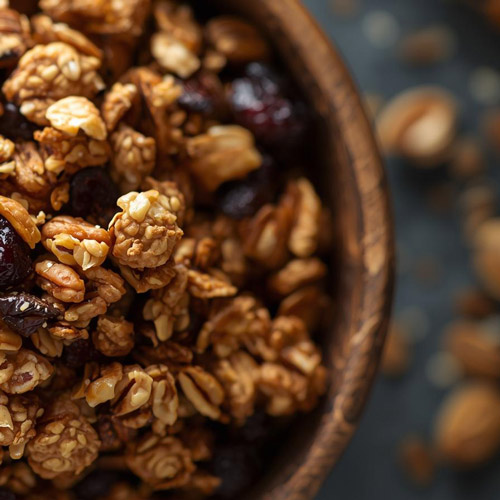
Building a dietary cereal range that converts across all three major dietary profiles is one of the more straightforward wins available to an independent retailer. When a customer walks in asking for “gluten-free cereal,” they are not all asking for the same thing. One is a gluten-intolerant shopper who needs a safe, grain-based granola with a label they can trust. Another is following a ketogenic diet and will check the macros before they buy anything. A third is paleo and is looking for a grain-free product with clean, functional ingredients.
Three customers, one question, three completely different products. A single gluten-free option covers one of them.
This article covers how to range across all three profiles with a small, purposeful selection, how to organise the shelf so each customer finds what they need, and how to source the whole section from a single Australian supplier.
Why gluten-free, keto, and paleo granola are not interchangeable
Gluten-free, keto, and paleo granolas are built from different ingredient foundations and sold to customers with different purchasing motivations. Stocking one does not cover the others.
The gluten-free shopper is looking for ingredient safety
A gluten-free granola is formulated specifically to exclude gluten-containing grains, using gluten-free ingredients such as rice, quinoa, or buckwheat as its base. The customer buying it is motivated by intolerance or sensitivity. Their primary concern is that the product is safe and transparently labelled.
The keto shopper is reading the nutrition panel
A keto granola contains no grains at all. It is built to deliver high protein and fat while keeping net carbohydrates low. The keto customer’s primary filter is the nutrition panel, not the ingredient list. If the macros do not stack up, they will not buy it.
The paleo shopper is buying a food philosophy
A paleo granola is also grain-free, but the purchasing logic is different again. The paleo shopper is guided by an ingredient philosophy: foods that are whole, minimally processed, and consistent with pre-agricultural eating patterns. What they are looking for on the label is what is not there as much as what is. No grains, no refined sugars, no artificial anything.
How many products should a dietary cereal range include?
Three to four products cover the range. One grain-based gluten-free granola, one or two keto options, and one paleo product gives each customer profile a dedicated choice without overcrowding the section.
Why keto and paleo shoppers will not substitute
The practical case for carrying at least one product per profile comes down to what each customer is willing to settle for. Keto and paleo shoppers are, by definition, committed to a specific nutritional framework. They do not substitute. If the keto option is not there, they do not buy the gluten-free oat granola instead: they leave, or they order online. Stocking across all three profiles with a small, purposeful selection means those customers convert at the shelf rather than elsewhere.
A workable section covers three to four products for most independent retailers. One grain-based gluten-free granola for the gluten-intolerant shopper. One or two keto granolas, where offering two flavours in the same format gives the category a sense of depth without requiring significant extra shelf space. One paleo option that gives the section a grain-free, clean-label choice no conventional cereal range can replicate.
Which granola suits each dietary customer?
The right product for each customer comes down to what they are looking for on the label. Gluten-free shoppers want ingredient transparency; keto shoppers want macro data; paleo shoppers want whole, unprocessed ingredients and nothing that falls outside their eating framework.
What gluten-free shoppers look for on a granola label
Gluten-intolerant shoppers are not browsing; they are screening. The first thing they check is whether the product is explicitly free from gluten-containing grains, and they will read the ingredient list to confirm it rather than rely on front-of-pack claims alone. After that, they are looking at ingredient quality: natural sweeteners, recognisable whole ingredients, and nothing artificial. A granola built on a rice and seed base, sweetened with maple syrup and packed with nuts and dried fruit, gives this customer everything they are looking for without asking them to compromise on taste or texture.
What keto shoppers look for on a granola label
Keto shoppers read the nutrition panel before anything else. They are calculating net carbohydrates, checking that protein is high, and confirming that fat content is substantial. The product they are looking for is built entirely from nuts and seeds, with no grain base and no added sugars, and the panel should make that clear at a glance. A product that does not put its macro profile front and centre will lose this customer before they have finished reading it.
What paleo shoppers look for on a granola label
Paleo shoppers read the ingredient list with a specific question in mind: does this contain anything that falls outside whole, minimally processed foods? Grains, refined sugars, and artificial additives are all disqualifying. Beyond those exclusions they are looking for nuts, seeds, coconut, and natural sweeteners, and a product that delivers real crunch and natural sweetness without compromise. A product with added probiotics goes a step further, connecting to a paleo interest in gut health that extends well beyond simple ingredient avoidance.
How to separate and sign a dietary cereal shelf
Separate the three profiles with clear shelf signage, one label per dietary category, so each customer can navigate directly to the right product without reading every label on the shelf.
What language to use on dietary cereal shelf signage
Clear shelf signage by dietary profile is the most direct solution. Three shelf strips or header cards, one per profile, allow each customer to navigate immediately to the relevant section. The language on the signage matters: “Gluten Free” for the gluten-intolerant shopper, “Keto” or “Grain Free, High Protein” for the macro-focused buyer, and “Paleo” or “Grain Free, Functional” for the ingredient-philosophy shopper. These are the terms these customers already use when they search online, discuss with their communities, and look for at the shelf.
Can you source gluten-free, keto, and paleo granola from one Australian supplier?
Yes. Plum Foods, Opera Foods’ own brand, covers all three profiles, which means one wholesale account, one order, and consistent Australian-made quality across the section.
For an independent retailer managing a lean operation, the overhead of maintaining multiple supplier relationships for a small specialty category is a real consideration. Each additional supplier adds an account to manage, a minimum order to meet, and a freight schedule to track.
Proudly made right here in Australia, Plum Foods is a manufacturer of premium granola with a focus on clean-label products that deliver on both taste and nutrition. For retailers, that means a range built to satisfy shoppers who read labels carefully and buy accordingly. The full dietary cereal range is available through one Opera Foods wholesale account.
How to direct customers to the right dietary granola
Most customers know their dietary framework. What they need from floor staff is a quick, confident direction to the product that meets it.
Directing the gluten-free shopper
Gluten-intolerant shoppers are looking for a grain-based option with a clear gluten-free label. Direct them to the Maple Nut Crunch Gluten Free Vegan Granola and note it is handmade in Australia. Shoppers avoiding gluten for broader dietary reasons may also find what they need in the keto or paleo range, both of which are grain-free by design.
Directing the keto shopper
Keto shoppers want to know the granola is grain-free and high in protein. Direct them to the keto range and confirm there are no oats or grains, with protein content clearly listed on the panel. If they want a flavour recommendation, blueberry is fruity and lighter, whilst cinnamon is warmer.
Both keto flavours are available to order, Blueberry Keto Granola and Cinnamon Keto Granola.
Directing the paleo shopper
Paleo shoppers want grain-free, clean ingredients and no refined sugars. Direct them to the Paleo Probiotic Gluten Free Granola. If they ask about the probiotic, explain that it is added to the finished granola and sits comfortably within a paleo eating philosophy centred on gut health and whole-food nutrition.
Find out more about the Paleo Probiotic Gluten Free Granola from Plum Foods.
A dietary cereal section built across these three profiles does not require a large footprint or a complex ranging strategy. It requires four products, clear signage, and a clear understanding of who each product is for. The customers who buy into these dietary frameworks are loyal, informed, and return regularly. Getting the section right is the best thing a retailer can do to earn and keep that loyalty.
Ready to build a dietary cereal range across all three profiles? Explore the gluten-free granola range at Opera Foods and order wholesale direct.
This article was reproduced on this site with permission from operafoods.com.au the “Wholesale Retail Suppliers”.
See original article:- How to Build a Dietary Cereal Range For Retail